May
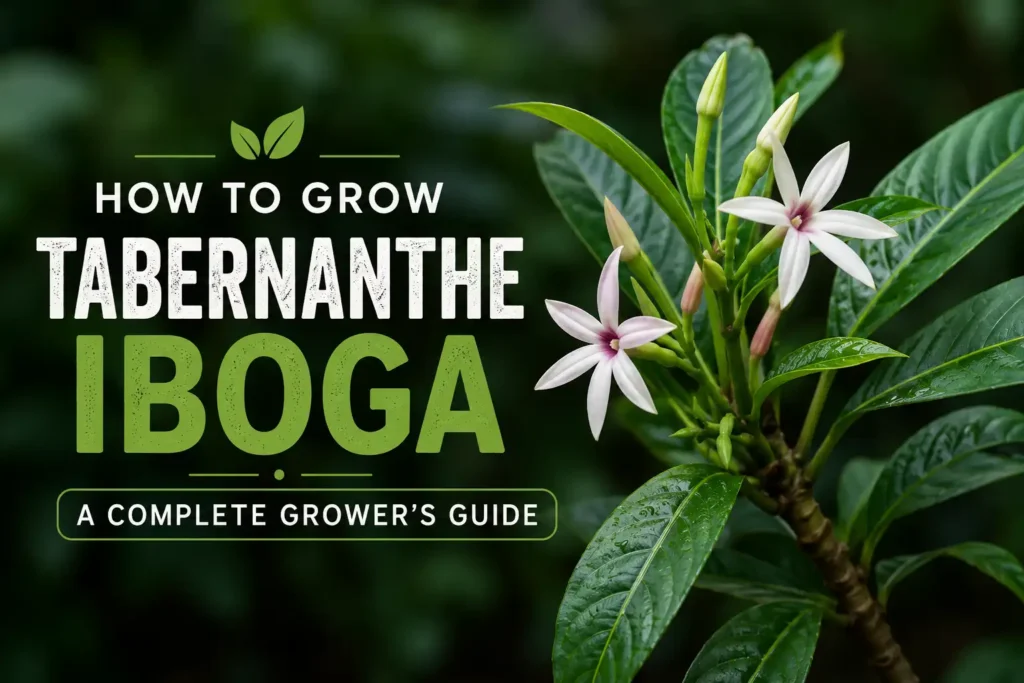
Tabernanthe iboga is one of the most extraordinary plants on earth and also one of the most challenging to cultivate outside its native habitat. Whether you are a botanical enthusiast, a researcher, or someone deeply interested in plant medicine, understanding how to grow tabernanthe iboga successfully requires patience, the right conditions, and a genuine respect for this slow-growing rainforest shrub.
This guide covers everything you need to know from soil preparation to seed germination in clear, practical terms.
What Is Tabernanthe Iboga?
Before getting into cultivation, a little context helps.
Tabernanthe iboga is a perennial shrub native to the equatorial rainforests of Central Africa primarily Gabon, Cameroon, and the Congo Basin. It grows slowly in the wild, taking anywhere from 7 to 12 years to reach full maturity. The plant is best known for its root bark, which contains ibogaine and a range of other psychoactive alkaloids used in traditional Bwiti healing ceremonies for centuries.
In its natural environment, iboga thrives under a dense forest canopy shaded, humid, and warm year round. Replicating those conditions is the central challenge of growing it elsewhere.
Can You Grow Iboga Outside Africa?
The short answer is yes but it requires effort and attention.
Iboga can be grown successfully in tropical and subtropical climates, or indoors in controlled environments. Growers in South America, Southeast Asia, and parts of southern Europe have cultivated the plant with good results by closely mimicking its native rainforest conditions.
The key variables are temperature, humidity, light, and soil get those right and the plant will reward your patience.
Ideal Growing Conditions for Tabernanthe Iboga
Understanding the plant’s natural environment is the starting point for successful cultivation.
Temperature Iboga prefers consistent warmth between 20°C and 30°C (68°F to 86°F). It does not tolerate frost and will struggle in temperatures below 15°C. If you live in a cooler climate, indoor growing is the practical route.
Humidity: As a rainforest plant, iboga thrives in high humidity ideally 70% to 90%. Regular misting, a humidity tray, or a greenhouse environment will help maintain this, especially indoors.
Iboga Preparation
Before you plant whether from seed or cutting proper preparation makes a significant difference in your success rate.
Prepare your growing environment first. Whether you are setting up a greenhouse, a grow tent, or an outdoor tropical garden, get your temperature, humidity, and light levels stable before introducing the plant. Iboga dislikes sudden environmental changes.
Prepare your soil mix carefully.
A well-aerated, moisture-retentive but free-draining medium is essential. Test your soil pH and aim for a slightly acidic range of 5.5 to 6.5. Adding mycorrhizal fungi to your soil mix can significantly support root development in the early stages.
Prepare your containers.
If growing in pots, choose deep containers iboga develops a substantial root system over time. Good drainage holes are non-negotiable. Starting in smaller pots and repotting as the plant grows is a better approach than starting too large.
Acclimatization: If you are introducing a young plant to a new environment, do it gradually. Sudden changes in light, temperature, or humidity can set the plant back significantly.
Growing Iboga From Seed
Growing iboga from seed is the most common starting point and also the most rewarding, though it requires extra care in the early stages.
Sourcing seeds: Fresh seeds give significantly better germination rates than older ones. Iboga seeds lose viability relatively quickly, so sourcing from a reputable supplier and planting promptly is important. Look for seeds that are plump, firm, and free from visible damage or mold.
Planting depth Sow seeds 1 to 2 cm deep in your prepared growing medium. Too shallow and they dry out; too deep and they struggle to emerge.
Germination conditions; Maintain a warm temperature of around 25°C to 28°C and keep the growing medium consistently moist but never waterlogged. A propagation dome or plastic wrap over the pot helps retain humidity during germination.
Germination timeline: Be patient. Iboga seeds can take anywhere from 2 to 8 weeks to germinate sometimes longer. Consistent warmth and moisture are the most important factors during this period.
Seedling care: Once seedlings emerge, introduce gentle indirect light gradually. Keep humidity high and avoid overwatering young iboga plants are sensitive to waterlogged conditions. Growth will be slow in the first year, which is entirely normal.
Watering and Feeding
Once established, iboga is relatively straightforward to maintain but it does not like extremes.
Watering Water thoroughly when the top layer of soil feels dry, then allow the medium to partially dry before watering again. Consistency is more important than frequency. Overwatering is the most common mistake with iboga cultivation.
Fertilizing: Use a balanced, diluted liquid fertilizer during the growing season roughly every 4 to 6 weeks. Avoid heavy nitrogen feeding, which encourages leafy growth at the expense of root development. A fertilizer with a slightly higher phosphorus content supports healthy root growth.
Common Challenges and How to Handle Them
Root rot: Almost always caused by overwatering or poor drainage. If you notice yellowing leaves and a soft, darkened stem base, act quickly remove the plant, trim affected roots, and repot in fresh, dry medium.
Leaf yellowing: Can indicate overwatering, nutrient deficiency, or too much direct light. Assess each variable systematically before adjusting.
Slow growth: Iboga is simply a slow grower. If the plant looks healthy but isn’t growing fast, that is normal. Resist the temptation to overfeed or overwater in an attempt to speed things up.
Pests: Spider mites and fungus gnats are the most common issues in indoor growing environments. Maintain good airflow, avoid overwatering, and treat promptly with appropriate organic solutions if pests appear.
How Long Until Maturity?
A well-cared-for iboga plant will begin to look established within 2 to 3 years. However, meaningful root bark development the part of the plant that contains significant alkaloid concentrations takes 7 years at minimum, with most experienced growers recommending waiting closer to 10 to 12 years for optimal potency. how to grow tabernanthe iboga
