May
If you’ve spent any time researching iboga-based products, you’ve likely come across two terms that appear side by side: ibogaine HCL and iboga TA. They come from the same plant. They’re used for similar purposes. But they are fundamentally different products and confusing the two can lead to serious missteps, especially when it comes to dosing and safety.
What Are These Two Products, Really?
Before diving into differences, a quick foundation.
Both ibogaine HCL and iboga TA originate from Tabernanthe iboga a rainforest shrub from Central Africa whose root bark has been used in traditional healing for centuries. The difference lies in how each product is processed after extraction.
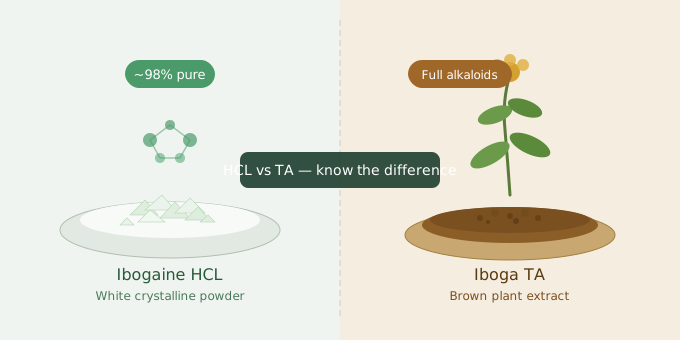
- Ibogaine HCL is a single, isolated compound the hydrochloride salt of ibogaine, refined to pharmaceutical grade purity (typically 98% or higher)
- Iboga TA (Total Alkaloid) is a broad-spectrum extract containing the full range of alkaloids present in the iboga plant ibogaine being just one of them
Visual Differences: What They Look Like
One of the quickest ways to distinguish these two products is simply by looking at them.
Ibogaine HCL Appearance
- Fine, white to off-white crystalline powder
- Consistent texture similar in appearance to many pharmaceutical salts
- Dissolves cleanly in water
- No strong odor
Iboga TA Appearance
- Ranges from light tan to dark brown powder or resin-like substance
- Coarser in texture than HCL
- Color variation is normal and reflects the range of alkaloids present
- May have a faint earthy or plant-like scent
Chemical Composition: The Core Difference
This is where the real distinction lives.
Ibogaine HCL contains one compound ibogaine, in its hydrochloride salt form. Everything else has been removed during the purification process. This gives it a known, measurable potency that makes precise dosing possible.
Iboga TA contains multiple alkaloids, including:
- Ibogaine (the primary one)
- Ibogaline
- Tabernanthine
- Coronaridine
- Noribogaine (in smaller amounts)
Each of these alkaloids has its own pharmacological activity. Together, they create what researchers call an entourage effect the combined action of multiple compounds working in concert, similar to how full-spectrum cannabis differs from isolated CBD.
Potency and Dosing: Why It Matters
This is arguably the most practically important difference and the one with the greatest safety implications.
Ibogaine HCL Dosing
Because HCL is a purified single compound, its potency is consistent and measurable. Clinical protocols use body-weight-based dosing (mg/kg) with confidence because the ibogaine content is known precisely.
Iboga TA Dosing
TA potency varies between batches. The ibogaine content in TA typically ranges from 40% to 80% depending on the extraction method and plant source. This variability means:
- You cannot apply HCL dosing guidelines directly to TA
- Two batches of TA from different suppliers may behave very differently
- Experienced guidance is even more essential when working with TA
Effects: How the Experience Differs
Both products produce ibogaine’s well-documented effects but the quality and character of the experience differs meaningfully.
With Ibogaine HCL
- Cleaner, more predictable onset
- Effects are primarily driven by ibogaine
- Preferred in clinical and medical settings where control is paramount
- Less likely to produce unexpected reactions from secondary alkaloids
With Iboga TA
- Broader, more complex experience
- Secondary alkaloids contribute additional layers to the effect
- Often described as feeling “closer to the plant”
- More commonly used in ceremonial or traditional healing contexts
- Some practitioners believe the full alkaloid spectrum produces deeper or more holistic outcomes
Which One Is Used in Clinical Settings?
The short answer: ibogaine HCL dominates clinical and research environments.
Medical professionals need precision. When a clinic in the Netherlands, Mexico, or South Africa administers ibogaine to a patient undergoing opioid detox, they need to know exactly how much ibogaine that person is receiving. HCL makes that possible. TA does not offer the same reliability.
Iboga TA, by contrast, remains popular in:
- Traditional iboga ceremonies led by Bwiti practitioners
- Holistic wellness retreats that value the full plant experience
- Contexts where the broader alkaloid spectrum is considered therapeutically important
Quick Reference: ibogaine HCL vs TA at a Glance
Ibogaine HCL | Iboga TA | |
Color | White / off-white | Tan to dark brown |
Composition | Single compound | Full alkaloid spectrum |
Purity | ~98%+ | 40–80% ibogaine |
Dosing | Precise | Variable |
Experience | Clinical, controlled | Broad, plant-like |
Best use | Medical / research | Ceremonial / holistic |
Safety profile | More predictable | Additional variables |
